
7 Warning Signs Your Home Is Asking for Help
Small problems rarely stay small. Here is what your home may be telling you—and when you should call someone.
Your home will often tell you something is wrong long before a major repair becomes necessary.
The trouble is that most of us are busy. We notice a small stain, a sticking door, a faint smell or a strange noise—and tell ourselves we will look at it later.
Sometimes later is fine. Sometimes it becomes expensive.
After more than 35 years of renovating, building and owning properties, I have learned that the smartest homeowners are not necessarily the ones who know how to fix everything. They are the ones who notice changes, ask good questions and get help before a manageable problem becomes a serious one.
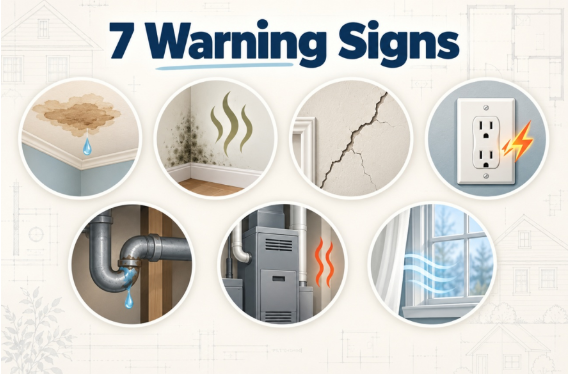
Here are seven warning signs worth paying attention to.
1. A water stain that appears—or keeps growing
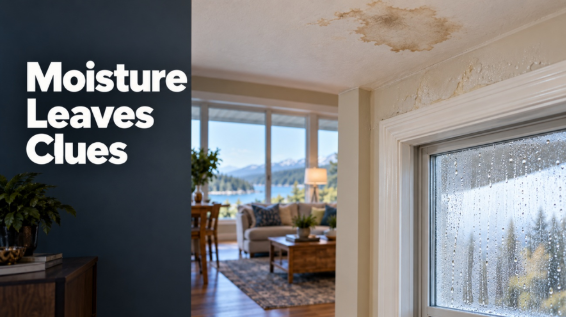
A brown mark on a ceiling, bubbling paint or a damp patch around a window is not merely cosmetic. It is evidence that moisture has reached a place where it does not belong.
The source could be:
A roof or flashing leak
A damaged pipe
Failed caulking around a tub or shower
Condensation
Water entering around a window or exterior wall
The stain may be several feet away from the actual leak because water can travel along pipes, joists and other building materials.
Mark the outside edge of the stain lightly with a pencil and add the date. If it grows, darkens or feels damp after rain, do not simply paint over it. Find the source.
Health Canada recommends checking foundations, walls, windows, roofs, plumbing, tubs and sinks routinely for leaks—and acting quickly when water or moisture appears. The important step is not just drying the visible area; it is correcting the source of the moisture. Health Canada
2. A musty smell that keeps returning
You may smell a moisture problem before you can see it.
A persistent musty odour in a basement, bathroom, closet or room with an exterior wall deserves investigation. Look behind furniture, beneath sinks, around windows and near exterior walls. Check the attic or crawl space if it can be done safely.
Mould is not always visible. Health Canada advises checking damp areas and places where water damage has occurred. Damp and mouldy conditions can also aggravate respiratory symptoms in some people. Health Canada
Cleaning the surface may remove what you can see, but mould can return if the moisture source remains. CMHC makes the central point very clearly: controlling mould begins with controlling moisture, repairing leaks and improving ventilation. Canada Mortgage and Housing Corporation
3. Cracks, sticking doors or floors that feel different
Not every crack means your home has a structural problem. Materials expand and contract, and minor settling can occur.
What matters is change.
Pay closer attention when:
A crack is new or becoming wider
Several cracks appear in the same area
Doors or windows suddenly begin sticking
A floor develops a noticeable slope or bounce
An outside wall appears to bow, lean or buckle
Water begins entering through a foundation crack
One symptom by itself may have an ordinary explanation. Several related changes—or continuing movement—justify a professional assessment.
Take dated photographs and measure the crack rather than relying on memory. That gives a qualified person something useful to evaluate.
4. Flickering lights, warm outlets or breakers that keep tripping
Electrical warning signs should never be treated as routine inconveniences.
A circuit breaker is designed to interrupt power when it detects an unsafe condition. If one breaker trips repeatedly, do not keep resetting it without determining why.
Other signs requiring prompt attention include:
Flickering or dimming lights
Buzzing or crackling from a switch or outlet
A warm or discoloured wall plate
A burning or hot-plastic smell
Sparks from an outlet
Loose plugs that will not remain securely in place
Stop using the affected fixture or outlet and contact a licensed electrical contractor. Do not remove the electrical panel cover or attempt electrical repairs unless you are properly qualified.
Technical Safety BC oversees regulated electrical work in the province and provides a directory for finding licensed contractors. Depending on the work, a permit may also be required. Technical Safety BC
If you see smoke, flames or signs of an active electrical fire, leave the home and call 911.
5. A sudden change in water pressure or plumbing behaviour
One slow drain may be a localized blockage. Several slow drains, recurring backups or gurgling sounds can point to a larger drainage or venting problem.
Watch for:
A sudden loss of water pressure
Toilets that rock, leak or refill continuously
Dampness beneath sinks
Water around the base of the water heater
Cabinets or flooring beginning to swell
Unexplained increases in water use
Sewer-like odours
Gurgling from several fixtures
A small leak can continue unnoticed inside a cabinet, wall or floor. By the time the damage becomes obvious, more than the pipe may need repair.
Know where your main water shutoff is before an emergency occurs. If water is actively escaping, shut off the supply when it is safe to do so and call for help.
6. Your heating system sounds, smells or performs differently
Homes make ordinary noises, and heating systems are no exception. The warning is a change from what is normal for your system.
Pay attention to:
Banging, grinding or squealing
Frequent cycling
Rooms becoming unusually hot or cold
Weak airflow
Unexplained increases in energy use
Soot or scorching near a fuel-burning appliance
A furnace or heat pump struggling to reach the thermostat setting
For fuel-burning equipment, carbon monoxide adds a risk you cannot detect with your senses. It is colourless and odourless. Make sure you have working carbon-monoxide alarms where required, test them regularly and arrange proper maintenance by a qualified professional.
If a carbon-monoxide alarm sounds—or several people experience sudden headache, dizziness, weakness or difficulty breathing—leave the building, call 911 from outside and follow emergency instructions. Technical Safety BC identifies carbon monoxide as a leading technical safety risk in the province. Technical Safety BC
7. Drafts, condensation or rooms that never feel comfortable
A cold room does not always mean the heating system is failing.
Air may be leaking around windows, doors, attic penetrations or other parts of the building envelope. Insulation may be missing or uneven. Excess indoor humidity may also create condensation on cold surfaces.
Look for:
Noticeable drafts
Persistent condensation on windows
Peeling paint around frames
Cold walls or floors
One room that is consistently uncomfortable
Unexpectedly high heating or cooling use
Natural Resources Canada notes that homes generally benefit from a combination of air-leakage control, moisture management and appropriate ventilation. Sealing every gap without considering ventilation can create other problems, so it is important to consider the house as a complete system. Natural Resources Canada

What should you do first?
You do not need to assume the worst every time your house creaks. You do need to pay attention when something changes, persists or appears in more than one place.
Use this simple approach:
Notice it. What changed, and when did it begin?
Document it. Take photographs, measurements and notes.
Limit further damage. Stop active water, discontinue use of unsafe equipment and keep people away from hazards.
Investigate the cause. Do not cover the symptom and assume the problem is solved.
Call the appropriate professional. Electrical, gas, structural and significant moisture concerns require qualified expertise.
The earlier you understand what your home is telling you, the more choices you usually have.
A minor repair may remain minor. A developing safety issue can be addressed before someone is hurt. And even when the problem turns out to be harmless, you gain something valuable: clarity and peace of mind.
If you have noticed something changing in your home and are unsure what it means, give Tony a call. A practical conversation now may help you avoid a much larger problem later. For a free consultation call 250-880-5311
